Coworking vs traditional offices: Which suits your company best?
When companies weigh different office solutions, the choice often comes down to coworking spaces or more traditional offices. Both have unique advantages, but the right fit depends on flexibility, cost and your growth plans.

Homni Teamet
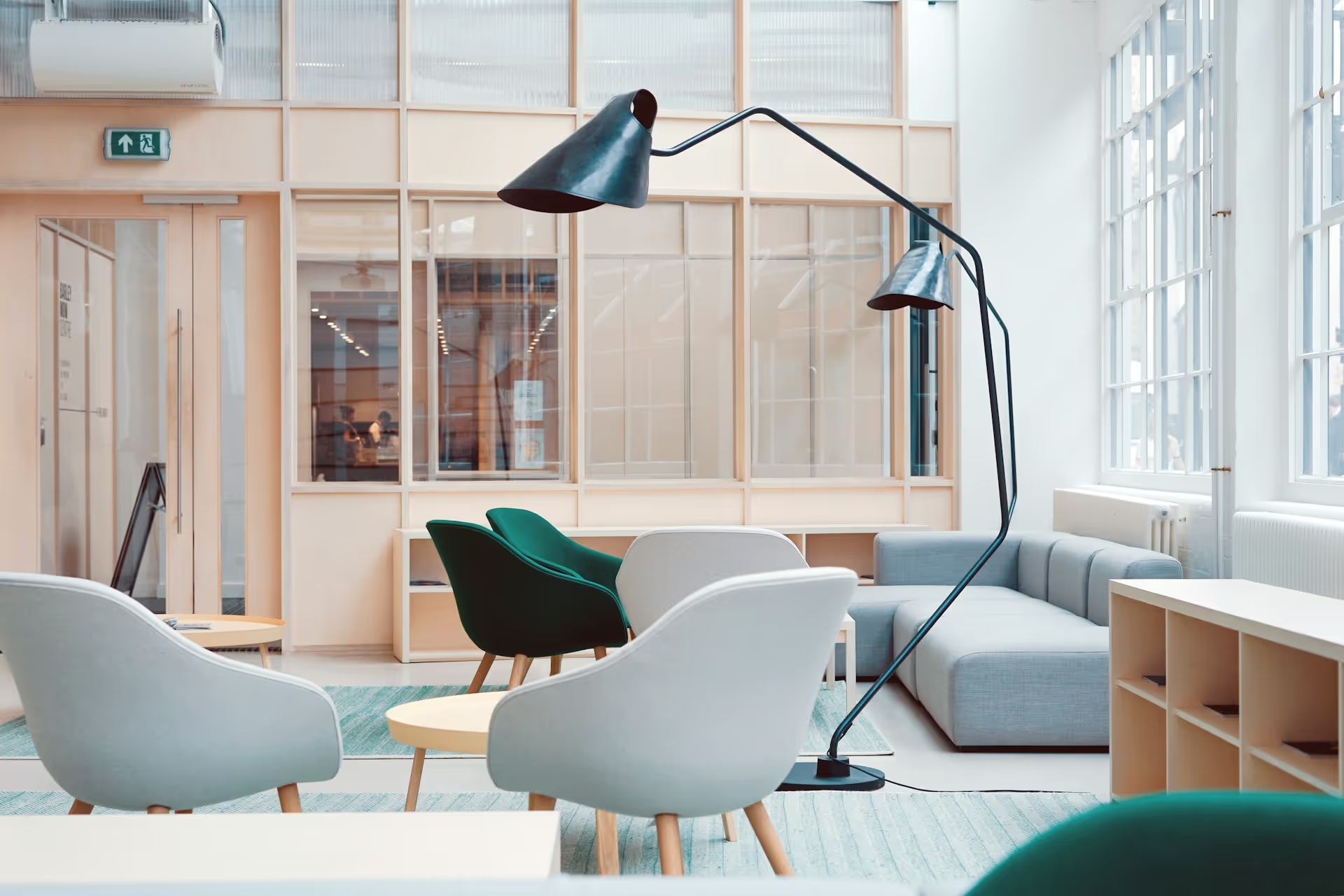
When companies weigh different office solutions, the choice often comes down to coworking spaces or more traditional offices. Both have unique advantages, but which solution fits your business best depends on factors such as flexibility, cost and your company's growth plans.
1. Flexibility
One of the biggest advantages of coworking is flexibility. Coworking spaces typically offer short-term contracts and the option to scale up or down based on your team's needs. This is especially useful for small businesses, startups or freelancers who need room to change.
Coworking advantages:
- Flexible lease terms
- Easy scaling
- Access to amenities at no extra cost (meeting rooms, Wi-Fi, kitchen etc.)
Traditional offices often come with longer leases, typically between 3 and 5 years. This can offer more stability, but for companies with unpredictable growth it can feel restrictive.
Traditional office advantages:
- Long-term stability
- Dedicated space tailored to your business
- Freedom to shape the office around your culture
2. Cost
When it comes to cost, coworking spaces often have a lower entry price compared to traditional offices, since many costs are bundled into the monthly fee. Tenants don't pay separately for internet, electricity or cleaning, which makes it easier to stay within budget.
In a traditional office you typically have to account for furniture, heating, internet and other services — costs that can be a financial burden, especially for smaller companies.
Coworking advantages:
- All services included in one price
- No upfront cost for furniture or technical infrastructure
Traditional office advantages:
- Better long-term cost predictability
- Scalability on larger footprints at competitive prices over time
3. Work environment and networking
Coworking spaces stand out by creating dynamic environments where different companies and freelancers work side by side. This can stimulate innovation and collaboration, making them an ideal choice for startups and creative industries.
Coworking advantages:
- Networking opportunities with other businesses
- Access to events, workshops and shared activities
- Creative and social work environment
Traditional offices, on the other hand, give you a more private and controlled workplace where you can adapt the interior and atmosphere to your own needs. This can matter for businesses that require a more focused and discreet environment.
Traditional office advantages:
- Private workspace
- Freedom to build a tailored company culture
- Control over meetings and confidential information
4. Customization and growth
Coworking spaces are often limited when it comes to customization — you have to accept the shared look and interior that's on offer. Traditional offices give you full freedom to customize, which can be decisive for companies with a clearly defined brand or specific functional needs.
Coworking advantages:
- Ready to use, no fit-out needed
- Quick access to a workspace with no renovation period
Traditional office advantages:
- Full customization of both interior and function
Summary: Which is right for your company?
The choice between coworking and traditional offices depends largely on your business needs and future growth plans. For small businesses and startups that want flexibility and networking, coworking can be the perfect solution. For more established companies that need control and customization, a traditional office is often the way to go.